





Learning in Motion: Reflections from Vrutti’s MSME Team
Project Associate - MSME Portfolio
As noted, “Reflections should be reflective, but actions should be prospective.” This moment marks a shift, not just in how we think, but in how we will act.
The Strategic Reflection Workshop did not feel like a review meeting. It felt like a pause. A moment to ask whether the work we are doing today is still aligned with the realities we are seeing on the ground. What became increasingly clear through the conversations is that something has shifted, not just in our programs, but in the aspirations of the entrepreneurs we work with. Vrutti has worked in contexts where entrepreneurship was often a fallback option, a response to economic necessity. Yet, through this reflection, we began to recognize that many of the entrepreneurs we now engage with are not simply trying to survive. They are trying to grow, to be seen, to be taken seriously, to build something credible and sustainable. This is not a marginal shift; it is a structural one. And it brings with it a direct challenge: if entrepreneurs are moving toward growth, can we continue designing from a livelihood mindset?
From Livelihood to Growth: A Shift in Aspiration
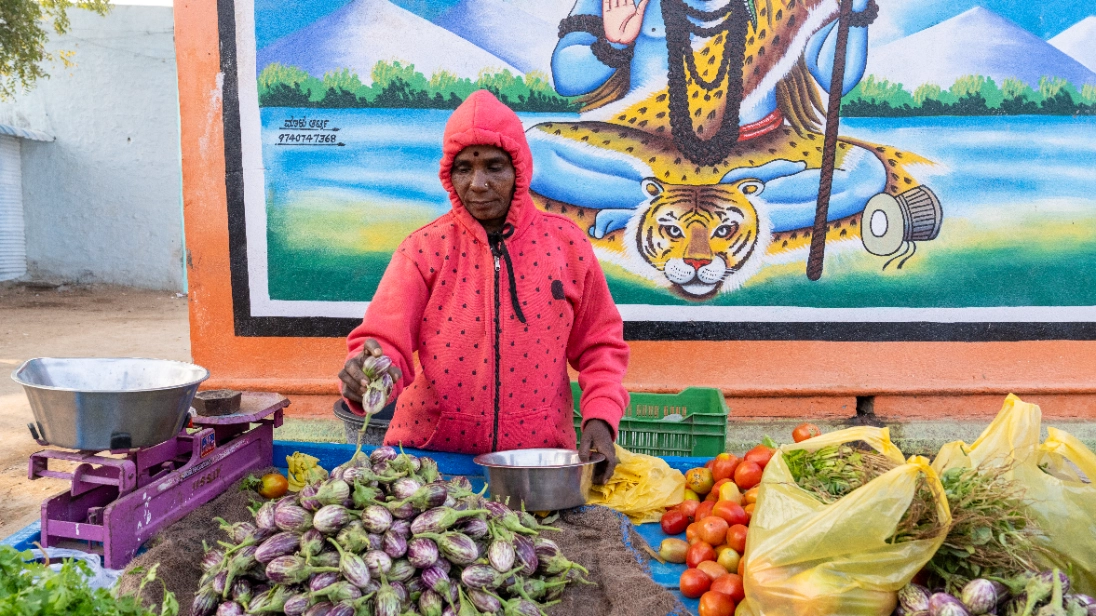
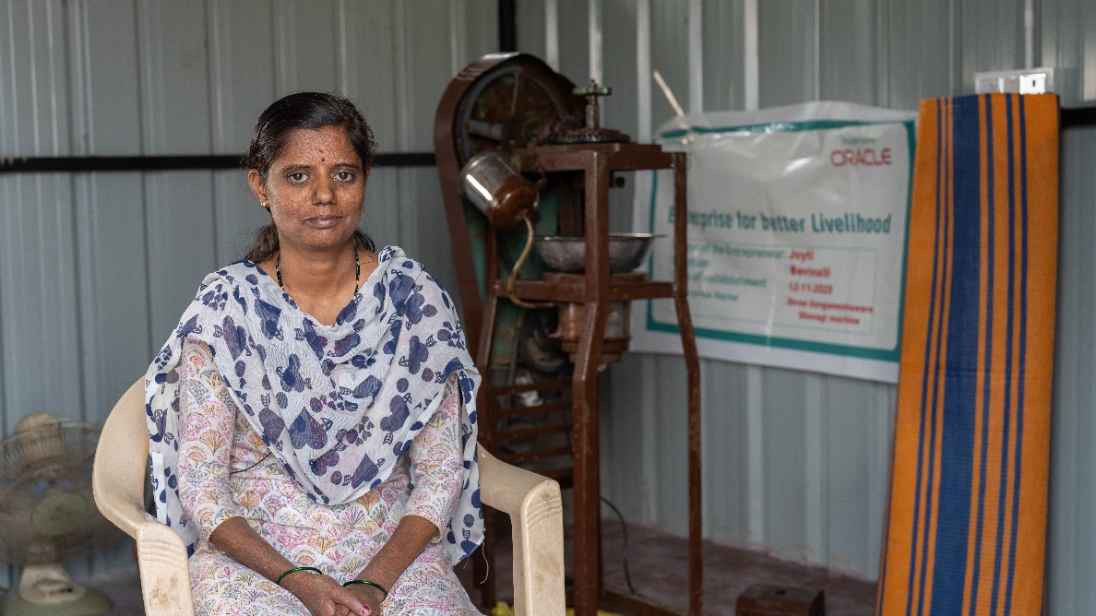
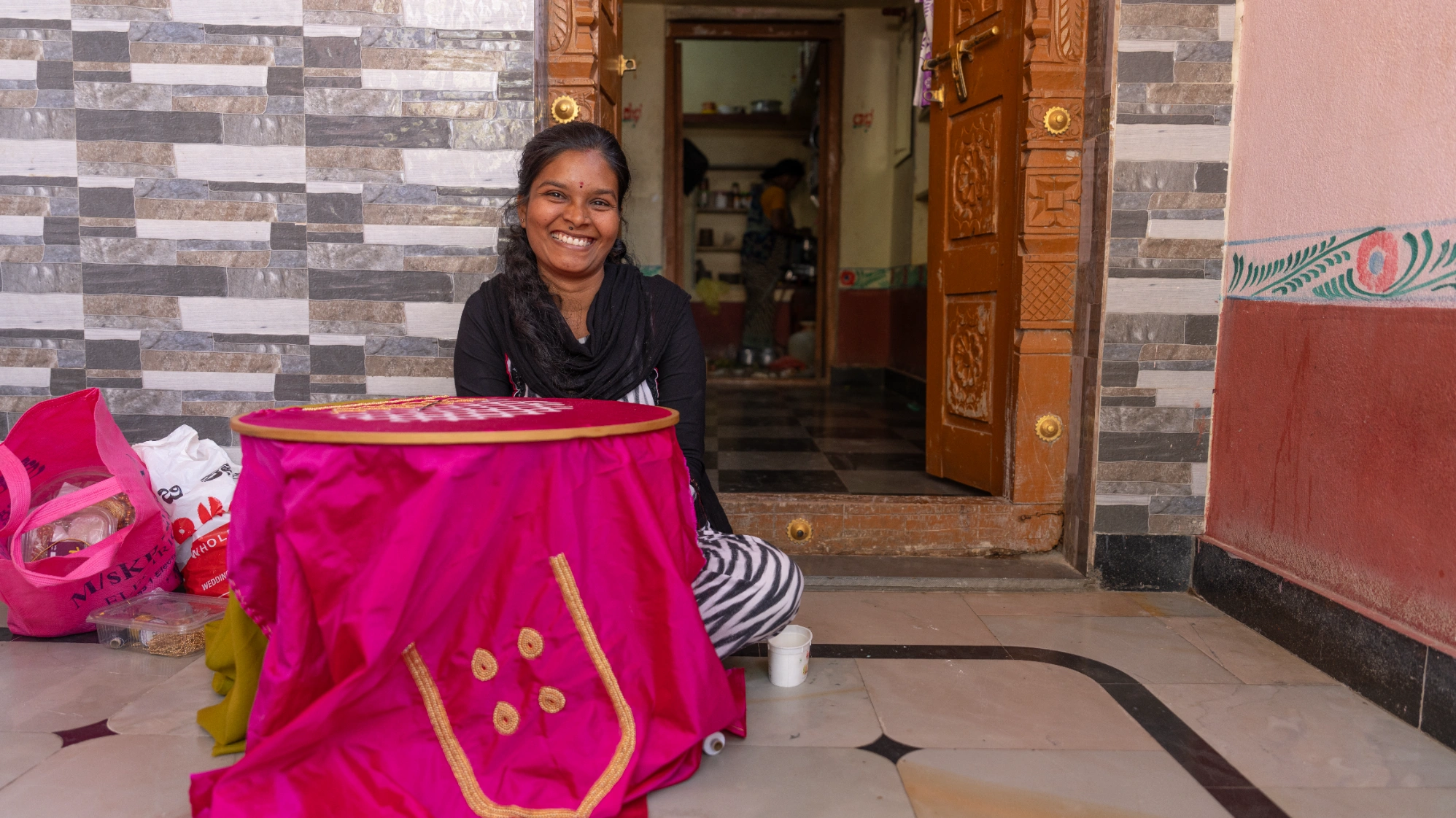
A foundational insight from this exercise is the recognition that entrepreneurship in our context is gradually moving from necessity-driven to growth-oriented. Entrepreneurs are no longer asking only "How do I survive?", they are asking "How do I grow?" This is a meaningful change, and one that Vrutti is well-positioned to respond to.
Growth can no longer be treated as a hopeful outcome; it must be intentionally designed. This means prioritising market-facing capabilities such as positioning, repeat transactions, and credibility, while ensuring that our interventions prepare entrepreneurs for independence beyond our programs. It has prompted us to examine the scaffolding we offer: the mentorship, the branding support, the network-building. Our goal has always been to build entrepreneurs who are rooted in the market, not dependent on the organisation. True growth, in our view, is the kind that continues long after our direct support has ended. This remains the north star of our design.
Our work is anchored in a progression that reflects real trajectories: Survivors → Living with Dignity → Realising Potential. Our role is to bridge the distance between survivalist struggle and realised potential, equipping entrepreneurs with the tools to navigate broken systems, not merely cope with them.
Affordable Excellence: Competing on Integrity
One of the most grounding insights from this cycle is the concept of Affordable Excellence. Our entrepreneurs may not have the capital to compete on scale, but they can compete on the integrity of their process, through professional presentation, ethical practices, and strategic branding. This shifts the conversation from "doing more" to "doing better."
This is not a compromise; it is a deliberate market position. And it opens up a powerful design question: how do we build pathways that take entrepreneurs from where they are today to where they are capable of going?
Affordable Excellence allows entrepreneurs to build credibility before scale, access higher-value markets, and differentiate without entering a race to the bottom on price. To make this real, we must treat quality, branding, and customer experience as core, not peripheral elements of our design. Going forward, we will align entrepreneurs with markets that reward these attributes and embed clear quality benchmarks into our programs. The shift is simple but significant: from helping entrepreneurs participate in markets to helping them compete with intent.
The Tiered Progression Model: Building Pathways, Not Just Participation
Our experience has made one thing clear: uniform programming does not serve a diverse entrepreneurial base. Some entrepreneurs are ready to scale, while others require foundational support. Designing for both in the same way limits both.
The Level 1 to Level 3 progression model is our response, not as a categorisation tool, but as a system for enabling movement. Each level will have clear entry and exit criteria, and interventions will be stage-specific. Success will no longer be measured by participation within a level, but by progression across levels.
The model creates differentiated pathways for entrepreneurs at different stages of readiness. This also requires a more explicit stance on readiness. Not all entrepreneurs will move at the same pace, and acknowledging this is not exclusion, it is design clarity. Our role is not to hold everyone in the same place, but to ensure that movement is possible, visible, and supported.
An important question this model surfaces is: what drives upward movement? Why do some entrepreneurs transition between levels while others plateau? This is an area where a stronger action research lens will help us design more intentional bridges between tiers.
The Inclusion-Readiness Balance
As our model evolves toward growth-oriented design, we hold an important philosophical commitment at its centre: inclusion is not in tension with ambition. The tiered model is not about sorting winners from others, it is about meeting entrepreneurs where they are and designing progression that is both aspirational and grounded.
Inclusion and readiness are often framed as competing priorities. In practice, the tension emerges only when design is unclear.
Our position is straightforward: we remain inclusive in who enters the system, but we differentiate how support is delivered and how progression is enabled. Inclusion does not mean uniformity; it means ensuring that every entrepreneur has a pathway forward. Readiness is not a filter-it is a guide for how support is structured. The responsibility lies with us to design systems that allow entrepreneurs to move, rather than expecting them to fit into static program structures.
Growth-oriented design requires clarity about readiness. It means being honest that not every entrepreneur is at the same stage, and that designing for this reality is itself a form of respect. Our challenge is to offer differentiated tracks that honour where an entrepreneur currently stands, while building the conditions for upward movement.
Power, Agency, and What Success Really Looks Like
Income stability matters, but it is not sufficient.
What we are increasingly
observing are shifts in agency and these are far more indicative of sustained change.
The ability of an entrepreneur to negotiate on their own terms, to plan across
generations, and to redistribute power within their household and community.
Some of the most significant outcomes from this cycle are also the hardest to capture on a spreadsheet: Women negotiating market terms independently, shifts in household decision-making, and increased visibility for historically excluded entrepreneurs are not secondary outcomes; they are central to what transformation looks like in our context.
These shifts represent changes in power, not just earnings. And they signal a depth of transformation that we are committed to documenting more rigorously. As a result, we will expand how we define and measure success. Alongside income, we will begin tracking decision-making power, negotiation capacity, and the sustainability of these changes beyond program engagement. Because without agency, income gains remain fragile.
Mentorship that Meets Entrepreneurs Where They Are
One of the most valuable design signals from this cycle came from the entrepreneurs themselves. Their preference for 1:1 mentorship over classroom-style learning told us something important: they have no patience for abstractions. They are navigating real-time business challenges and need support that is immediate, contextual, and specific.
This is not a critique of structured curriculum, it is an invitation to make it more responsive. Our response is to move toward modular, responsive mentorship systems that support decision-making in real time. Content will continue to play a role, but it will be designed to enable action rather than deliver abstraction. The challenge ahead is scale but not at the cost of relevance.
What Will Change Next
In the immediate term, this shift will translate into three concrete actions:
- Operationalising the Tiered Progression Model With defined movement pathways, stage-specific interventions, and progression tracking
- Embedding Affordable Excellence Through quality benchmarks, stronger market alignment, and positioning support
- Measuring What Matters Expanding metrics to include agency, decision-making power, and sustained independence
Where We Are Headed
These reflections are not just observations; they are commitments.
We are moving toward becoming a Growth Systems Architect. An organisation that designs for outcomes over activities, progression over access, and independence over dependency. This shift requires sharper choices, clearer benchmarks, and our commitment is not just to the participation of the entrepreneur, but to their eventual independence from us.Success, ultimately, is when our withdrawal is not experienced as a loss, but as the final stage of their growth.
This reflection does not resolve every tension but it does clarify our direction. The entrepreneurs we work with are already moving beyond survival.
And we are choosing to build a system that moves with them.