







From a Small Provision Store to a Growing Business
Across India's neighbourhoods, small provision stores are more than places to buy daily essentials; they are a primary source of livelihood for millions of families. Yet running a micro-retail business often means operating with thin margins, irregular cash flow and constant decisions about what to stock, how to manage credit and where to source products at better prices. For many retailers, growth is not simply about attracting more customers. It depends on having the knowledge, tools and confidence to make better business decisions every day.
Kasturi, 52, runs ASP Provision Store in Rotery Nagar, Kodichikkanahalli, Bengaluru. Her experience shows how practical business support can help an existing small enterprise move from simply getting by to planning for growth.
Starting with a small shop
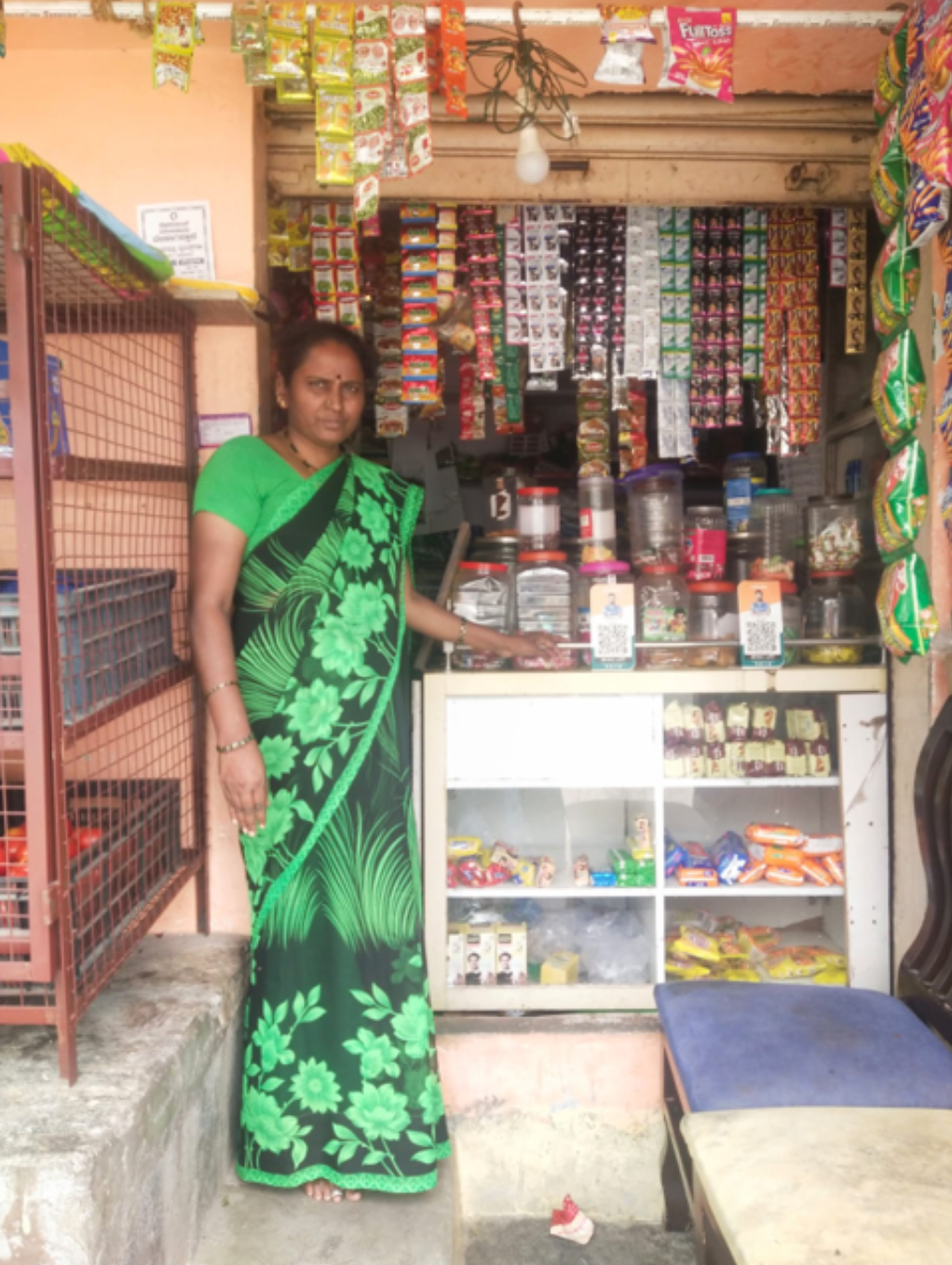
Before opening her shop, Kasturi worked as a checker in a garment factory and earned ₹6,500 a month. In 2016, she invested ₹20,000 to start an ASP Provision Store. The first few years were not easy. The shop initially made around ₹500 in daily sales, giving her an income of about ₹100 a day. Even when daily sales increased to around ₹1,000, her income remained limited. Health challenges also made it difficult for her to run the shop consistently. The challenge was not simply getting more customers. Kasturi needed to understand where the business was losing money and where small changes could make a difference.
Looking more closely at the business
Kasturi later enrolled in HUL’s SAFAL Retailer Strengthening programme, implemented by Vrutti. The support focused on everyday aspects of running a shop. Training covered customer communication, managing credit, following up on outstanding payments and deciding which products to stock. One-to-one mentoring helped her look at customer demand, product margins and how quickly different products were moving. One simple change was to her shop timings. After understanding when customers were most likely to visit, she changed her working hours from 6:30 AM-8:30 PM to 5:30 AM-10:00 PM. She also became more comfortable accepting digital payments through Google Pay and PhonePe and started tracking both cash and digital transactions. These may seem like small changes, but together they gave her a clearer picture of how her business was performing.
From running the shop to planning its next stage
Today, Kasturi’s shop records around ₹3,500 in daily sales and approximately ₹1,200 in daily income. She saves around ₹1,000 a month and is now looking at how she can expand the business. Her next plan is more ambitious. She wants to invest around ₹3 lakh to increase her stock of ration and household essentials, renovate and extend the shop, and has applied for a ₹3 lakh loan through Swathi Jyothi Cooperative. Her aim is to reach around ₹10,000 in daily sales and earn approximately ₹3,000 a day.
Better access to products has also made a difference. After obtaining Udyam Registration, Kasturi was able to access Wondermart, where some products were available at lower prices with doorstep delivery. This helped improve her margins. Her business journey has also included access to social protection. She enrolled in e-Shram and Ayushman Bharat, alongside formalising her enterprise through Udyam Registration.
What small retailers need to grow
Kasturi’s experience points to an important lesson for programmes working with small businesses: capital alone does not necessarily lead to a stronger enterprise. For a retailer, growth can depend on a combination of practical skills, regular mentoring, financial discipline, access to digital tools and better procurement options. Formal registration and access to finance can then help create room for the next stage of investment. The changes in Kasturi’s shop did not happen through one intervention or overnight. They came from paying closer attention to the business and making decisions based on what she was seeing every day.
For many small retailers, that kind of support can make the difference between continuing to operate and having the confidence and information to think about what comes next.